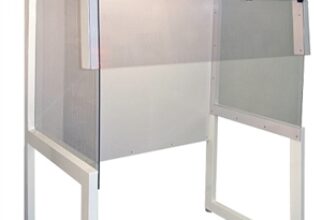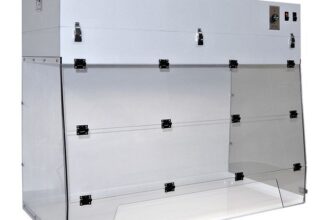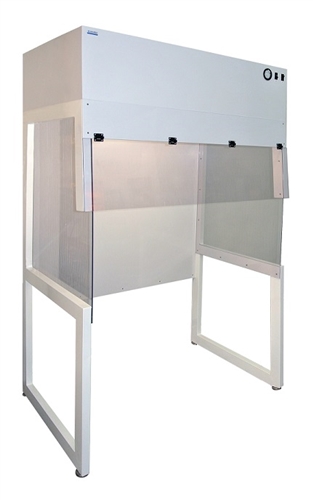
When you need a controlled, low-particle workspace, choosing the right laminar flow hood requires more than comparing prices or cabinet sizes. You need to match the hood to your application, available workspace, airflow direction, filtration requirements, and daily workflow. A careful evaluation helps you avoid buying equipment that looks suitable but does not provide the working conditions your process requires.
Start With Your Application
Before you buy a laminar flow hood, define exactly what you will perform inside the workspace. Laminar flow hoods are designed primarily to protect products, samples, and materials from airborne contamination. They are not a substitute for a biological safety cabinet or chemical fume hood when personnel or environmental protection is required.
List the materials you will handle, the size of your equipment, the frequency of use, and the cleanliness requirements of your process. Consider whether you need the hood for sterile preparation, electronics assembly, pharmaceutical work, sample handling, or another non-hazardous application.
This simple assessment gives you a practical starting point for comparing specifications instead of selecting equipment based only on appearance or price.
Choose Horizontal or Vertical Airflow
Airflow direction is one of the most important specifications to check.
A horizontal laminar flow hood moves filtered air from the rear of the cabinet toward the front. This configuration can provide an unobstructed airflow path across the work surface and can work well when your process uses smaller items and requires minimal turbulence around the workspace.
A vertical laminar flow hood moves filtered air downward from the top of the cabinet toward the work surface. This configuration can be useful when you need additional vertical workspace or work with larger equipment.
Also examine your laboratory layout. Horizontal models may require additional clearance behind the unit, while vertical designs may require sufficient overhead space for installation and service.
Do not assume one airflow direction is universally better. Select the configuration that matches your process and physical workspace.
Examine HEPA or ULPA Filtration
Filtration directly affects the cleanliness of your working environment. Check whether the hood uses a HEPA or ULPA filter and review the manufacturer’s stated filtration performance.
Do not stop at the filter name. Check the filter specifications, replacement availability, monitoring provisions, and certification documentation. You should also understand how the filter integrates with the blower and airflow system.
A quality filtration system works together with controlled airflow to reduce airborne particles around your work area.
When comparing models, ask for documentation that allows you to verify the stated performance rather than relying on vague claims such as “high efficiency.”
Check Work Area Dimensions and Construction
Measure the equipment and materials you actually use before selecting cabinet dimensions. The internal width, depth, and height should provide enough room for your normal workflow without forcing you to overcrowd the work surface.
Pay attention to the work surface material as well. Stainless steel and other laboratory-grade materials can make routine cleaning easier and provide durability for repeated use.
You should also inspect access doors, lighting, controls, electrical requirements, and available accessories. If you plan to place the hood on an existing laboratory bench, confirm its footprint and weight capacity before ordering.
For specialized applications, consider whether optional stands, casters, ergonomic features, or additional lighting could improve daily operation.
Verify Airflow, Noise, and Installation Requirements
A laminar flow hood needs more than an effective filter. The blower must provide suitable airflow through the filter and across the working area.
Review the manufacturer’s airflow specifications and determine whether the unit is designed for the operating conditions of your application. Also check noise ratings if the hood will operate for several hours each day.
Before purchasing, confirm electrical requirements, clearance around the cabinet, installation conditions, and service access. A model that fits physically but cannot be installed correctly can create unnecessary delays and additional costs.
Your room environment matters too. Drafts, nearby doors, HVAC outlets, and heavy traffic can interfere with controlled airflow, so consider the planned installation location before finalizing your purchase.
Review Certification, Maintenance, and Support
Ask what certification or performance testing is provided with the unit and what documentation you will receive after installation. Depending on your application and facility requirements, you may need periodic testing or recertification.
You should also understand the maintenance schedule before purchasing. Check how filters are accessed, how replacement parts are supplied, and whether technical support is available.
A lower initial purchase price may not represent the complete ownership cost. Consider filter replacement, service, certification, energy use, accessories, and downtime when comparing options.
If you are ready to buy a laminar flow hood for controlled laboratory work, review the available configurations from Global Lab Supply and compare the specifications against your application requirements.
For additional laboratory equipment and solutions, explore laboratory equipment and contamination-control solutions from Global Lab Supply. When you need help matching equipment to your application, you can also contact a laboratory equipment specialist for laminar flow hood selection assistance.
Frequently Asked Questions
What should you check before buying a laminar flow hood?
Check the application, airflow direction, filter type, work area dimensions, airflow specifications, construction materials, noise level, installation requirements, certification, maintenance needs, and available technical support.
Should you choose a horizontal or vertical laminar flow hood?
Choose based on your workflow, equipment size, available space, and required airflow pattern. Horizontal models direct air toward the front, while vertical models direct filtered air downward over the work surface.
Does a laminar flow hood protect the operator?
No. A laminar flow hood is primarily designed to protect the work or product from airborne contamination. It should not be used as a replacement for appropriate containment equipment when handling hazardous biological or chemical materials.
Is HEPA filtration important in a laminar flow hood?
Yes. HEPA filtration is a fundamental component of many laminar flow hoods. You should review the manufacturer’s filter specifications and performance documentation rather than selecting a model based solely on the word “HEPA.”
How can you select the right laminar flow hood size?
Measure the equipment and materials you regularly use, then select a work area that provides adequate space without unnecessary cabinet size. Also account for installation clearances, service access, and the available laboratory bench or floor area.