Understanding ICO Development in Today’s Market
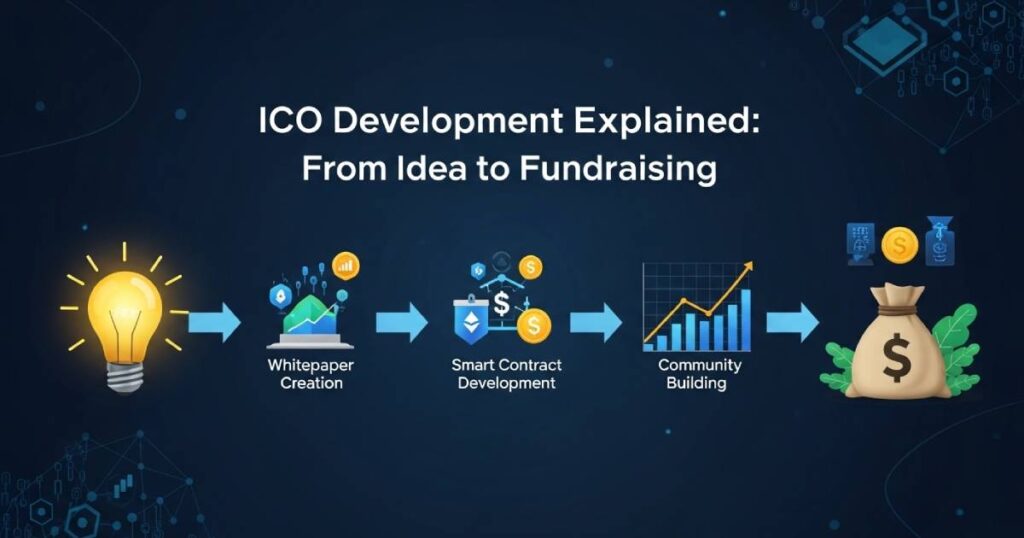
Initial Coin Offerings, commonly known as ICOs, have evolved far beyond their early hype-driven phase. What once started as a quick fundraising mechanism has now matured into a structured, compliance-aware process that combines technology, finance, and marketing. ICO development today is less about simply launching a token and more about building a sustainable ecosystem that can attract, engage, and retain investors.
At its core, ICO development involves creating a cryptocurrency token and offering it to early backers in exchange for funding. However, the real work lies in everything that surrounds that token. From defining its purpose to ensuring legal alignment, every step plays a role in how the project is perceived and how it performs after launch.
Projects that approach ICO development with clarity and structure tend to build stronger trust. On the other hand, those that rush into token sales without a solid foundation often struggle to maintain momentum once trading begins.
The Foundation Stage: Turning an Idea into a Viable Concept
Identifying a Real Problem and Market Fit
Every successful ICO begins with a clear problem statement. Investors today are more informed and selective, which means vague ideas rarely gain traction. A project must show how it fits into an existing market or creates a new one with practical relevance.
For instance, projects in sectors like decentralized finance, gaming, and real-world asset tokenization gained attention because they addressed specific gaps. Whether it is improving liquidity, reducing intermediaries, or enabling fractional ownership, the value must be easy to understand and justify.
Without a clear use case, even the most technically advanced token struggles to attract long-term participation.
Defining Token Utility and Ecosystem Role
Once the concept is clear, the next step is to define how the token fits into the ecosystem. This is where many projects lose direction. A token should not exist just for fundraising; it must serve a purpose that users can interact with regularly.
Some common utility structures include:
- Access to platform features or services
- Governance participation through voting mechanisms
- Staking for rewards or network security
- Payment within the ecosystem
A strong token utility creates ongoing demand. It connects user activity with token usage, which helps maintain relevance beyond the initial sale phase.
Structuring Tokenomics for Long-Term Stability
Tokenomics is one of the most critical components of ICO development. It determines how tokens are created, distributed, and managed over time. Poor tokenomics often becomes visible only after launch, when price volatility and user behavior begin to reflect underlying imbalances.
Key elements that require careful planning include total supply, allocation, vesting schedules, and emission models. Each of these factors influences how the market responds once the token becomes tradable, which is why many projects rely on an ICO development company to structure these variables with market behavior in mind.
For example, if a large percentage of tokens unlock shortly after the ICO, it can lead to heavy selling pressure. Even strong projects can face downward price movement simply because of supply imbalance. On the other hand, overly restrictive distribution can reduce liquidity and limit participation.
The goal is to create a structure where all stakeholders have aligned incentives. Early investors, team members, and the community should benefit from long-term growth rather than short-term exits.
Balancing Supply, Demand, and Incentives
Tokenomics is not just about numbers; it is about behavior. How users interact with the token depends on how incentives are designed.
A balanced approach usually includes:
- Gradual token release through vesting
- Allocation that supports both development and community growth
- Mechanisms that encourage holding or participation
- Controlled inflation or deflation models
This balance helps maintain stability while allowing the ecosystem to grow organically.
Legal and Compliance Considerations in ICO Development
Navigating Regulatory Frameworks
Regulation has become a defining factor in ICO success. Different jurisdictions treat tokens in different ways, and projects must align with these frameworks before launching.
Countries such as the United States, Singapore, and the United Arab Emirates have introduced structured approaches to token offerings. This includes requirements related to investor protection, disclosure, and financial reporting.
Ignoring compliance can lead to serious consequences, including legal action or restrictions on trading platforms. More importantly, it affects investor confidence. Projects that demonstrate transparency and legal clarity tend to attract more serious participants.
KYC, AML, and Investor Protection Measures
Know Your Customer and Anti-Money Laundering processes are now standard in ICO development. These measures help verify investor identities and reduce the risk of fraudulent activity.
Implementing these systems does more than meet regulatory requirements. It signals that the project is committed to building a legitimate and secure environment for participants.
Building the Technical Backbone
Smart Contract Development and Auditing
Smart contracts are the foundation of any ICO. They handle token creation, distribution, and transaction logic. Since these contracts operate on blockchain networks, they must be secure and error-free.
A small vulnerability in the contract can lead to significant losses. This is why audits are essential. Independent security reviews help identify potential issues before deployment.
A well-audited smart contract builds confidence among investors and exchanges. It shows that the project has taken the necessary steps to ensure reliability.
Choosing the Right Blockchain Network
The choice of blockchain affects scalability, transaction costs, and user experience. Popular options include Ethereum, Binance Smart Chain, and Solana, each offering different advantages.
Projects often select a network based on:
- Transaction speed and cost
- Developer ecosystem and tooling
- Compatibility with wallets and exchanges
- Community adoption
Selecting the right network ensures that the token can function efficiently as user activity grows.
Creating a Strong ICO Presence
Developing the Whitepaper and Documentation
The whitepaper acts as the blueprint of the project. It explains the problem, solution, technology, tokenomics, and roadmap in detail. Investors rely heavily on this document to evaluate the project.
A strong whitepaper is clear, structured, and transparent. It avoids unnecessary complexity while providing enough depth to demonstrate credibility.
Supporting documents, such as pitch decks and technical papers, further strengthen the project’s positioning.
Designing an Investor-Focused Website
The ICO website is often the first point of interaction for potential investors. It must communicate the project’s value quickly and effectively.
Key elements typically include:
- Clear explanation of the project
- Token sale details and timelines
- Team information and credibility indicators
- Roadmap and future plans
- Secure participation process
A well-designed website helps convert interest into actual participation.
Pre-Launch Marketing and Community Building
Building Early Awareness and Trust
Marketing plays a significant role in ICO success. However, the focus has shifted from aggressive promotion to building genuine engagement.
Projects now invest in:
- Community platforms such as Telegram and Discord
- Social media presence on platforms like X
- Educational content that explains the project
- Partnerships with influencers and industry voices
The goal is to create a community that understands and believes in the project, rather than simply chasing short-term gains.
Creating Momentum Before the Token Sale
Pre-launch activity sets the tone for the ICO. This phase often includes announcements, previews, and early access opportunities.
Some projects introduce whitelist campaigns or early investor rounds to build anticipation. Others focus on content and discussions that gradually increase visibility.
Momentum built during this stage often translates into stronger participation during the token sale.
Executing the Token Generation Event and Fundraising Phase
Preparing for a Controlled Token Sale
By the time a project reaches the Token Generation Event, most of the heavy groundwork should already be complete. What remains is execution, and this stage often determines how the market reacts in real time.
A well-prepared ICO does not rush into fundraising. It enters the token sale phase with clarity on allocation, pricing tiers, and participation rules. Investors expect transparency at this point. They want to understand how tokens are priced, how funds will be used, and what they receive in return.
Clear communication during this stage reduces confusion. It also helps avoid situations where participants feel uncertain about timelines or token distribution. Even small gaps in information can lead to hesitation, which directly affects fundraising performance.
Structuring Fundraising Rounds
Most ICOs are not a single-phase event. Instead, they are structured across multiple rounds, each targeting a different type of participant.
Common fundraising stages include:
- Private sale for strategic investors and early supporters
- Pre-sale for early community participants
- Public ICO for broader market access
Each round typically comes with different pricing and allocation limits. Early rounds often offer lower prices as an incentive, while later stages reflect growing demand.
This layered approach helps projects secure early funding while gradually expanding participation. It also allows teams to build credibility as they move from private backing to public engagement.
Pricing Strategy and Investor Psychology
Token pricing is more than a numerical decision. It directly influences how investors perceive value and risk.
A very low price may attract quick attention, but it can also signal a lack of confidence if not supported by strong fundamentals. On the other hand, a high price without clear justification can limit participation and reduce liquidity.
Projects often use tiered pricing models where token value increases across rounds. This creates a sense of progression and rewards early involvement.
Investor psychology also plays a role here. Participants look for signals such as demand, allocation limits, and vesting conditions. A well-structured pricing strategy balances accessibility with perceived value.
Managing the Token Generation Event Smoothly
Avoiding Technical and Operational Disruptions
During the Token Generation Event, everything happens under close observation. Investors monitor transaction processing, token distribution, and platform performance.
Any delay or error can quickly affect confidence. This is why projects invest in stress testing their systems before launch. Smart contracts, payment gateways, and dashboards must function without interruption.
A smooth execution builds immediate trust. It shows that the project can handle real-world usage, not just theoretical scenarios.
Ensuring Fair and Transparent Distribution
Token distribution must follow the predefined rules exactly. This includes allocation limits, vesting schedules, and bonus structures.
Transparency is critical here. Investors expect to see accurate records of how tokens are distributed and how funds are handled.
Projects that maintain clear visibility during this phase often gain stronger support, even beyond the ICO.
The Role of a Token Development Company in ICO Success
Behind most successful ICOs is a structured development and execution team. A professional token development company plays a central role in turning ideas into a fully functional, investor-ready product.
Their involvement typically spans across:
- Designing token architecture and smart contracts
- Conducting security audits and technical validation
- Setting up ICO dashboards and investor portals
- Integrating payment systems and wallet compatibility
- Supporting compliance processes and documentation
Beyond technical work, experienced teams also guide strategic decisions. They help refine tokenomics, improve user experience, and ensure that the entire ICO process runs smoothly.
Working with a capable token development company often reduces risk. It brings technical precision and operational clarity, both of which are essential during high-stakes fundraising phases.
Exchange Listings and Market Entry
Transitioning from ICO to Active Trading
Once the ICO concludes, the next major step is listing the token on exchanges. This transition marks the shift from fundraising to open market participation.
Exchange listings provide liquidity. They allow investors to buy and sell tokens freely, which establishes a market-driven price.
However, listing too early without sufficient demand can lead to volatility. On the other hand, delaying listings can reduce momentum built during the ICO.
Timing becomes a key decision. Projects must align listings with market readiness and community interest.
Centralized and Decentralized Exchange Strategies
Most projects pursue a mix of centralized and decentralized exchange listings.
Centralized exchanges offer:
- Higher visibility and credibility
- Access to a broader user base
- Structured trading environments
Decentralized exchanges provide:
- Immediate accessibility
- Control over liquidity pools
- Lower barriers to entry
A balanced listing strategy helps projects manage both visibility and flexibility. It also ensures that the token remains accessible to different types of users.
Post-Launch Growth and Ecosystem Expansion
Maintaining Engagement After Fundraising
Many projects experience a drop in activity after the ICO. This usually happens when the focus shifts away from community engagement.
Sustained growth requires continuous interaction. Projects need to keep users informed, involved, and interested.
This includes:
- Regular updates on development progress
- Community events and discussions
- Incentive programs such as staking or rewards
- Transparent reporting of milestones
Ongoing engagement helps maintain trust. It also ensures that the community remains active as the project evolves.
Building Real Utility and Adoption
Long-term success depends on how well the token is integrated into real use cases. Without practical application, even well-funded projects struggle to retain relevance.
Adoption grows when users can interact with the token in meaningful ways. This could involve accessing services, participating in governance, or earning rewards through activity.
Projects that focus on utility tend to build stronger ecosystems. They move beyond speculation and create real value for users.
Common Challenges in ICO Development
Market Volatility and External Factors
Cryptocurrency markets are influenced by broader economic conditions, regulatory changes, and investor sentiment. Even well-structured ICOs are not immune to these factors.
Projects must be prepared for fluctuations in demand and price. This includes having contingency plans and maintaining communication during uncertain periods.
Managing Expectations and Deliverables
Another common challenge is aligning expectations with actual progress. Investors often look for quick results, while development timelines may extend longer.
Clear communication helps manage this gap. Projects that set realistic milestones and provide consistent updates tend to retain investor confidence.
Avoiding Over-Promising During Early Stages
In the early days of ICOs, many projects relied on exaggerated claims to attract attention. This approach rarely works today.
Modern investors look for credibility, not hype. They evaluate projects based on feasibility, execution capability, and transparency.
Keeping messaging grounded and realistic helps build long-term trust.
Conclusion
ICO development is no longer a simple process of launching a token and raising funds. It has evolved into a multi-layered journey that combines strategy, technology, compliance, and community building.
From defining a strong concept to executing a smooth Token Generation Event, each stage requires careful planning and coordination. The projects that succeed are those that treat ICO development as a complete lifecycle rather than a one-time event.
Fundraising is only the beginning. What follows, including exchange listings, ecosystem growth, and continuous engagement, ultimately determines whether a project sustains its position in the market.
Approached with the right structure and mindset, ICO development remains a powerful way to bring innovative ideas to life while connecting them with a global network of participants.